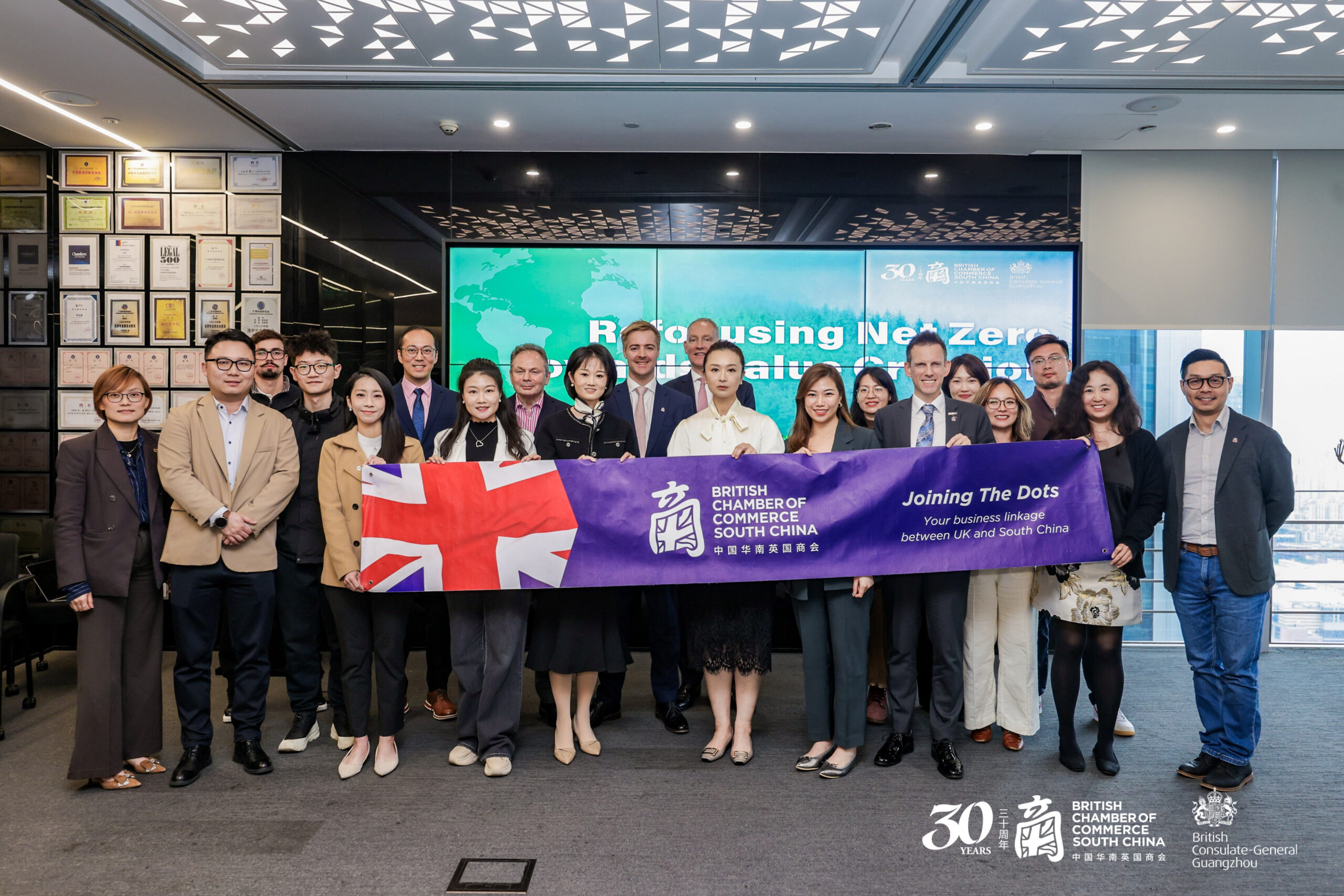


Refocusing Net Zero Towards Value Creation — BCCSC Net Zero Conference, Guangzhou
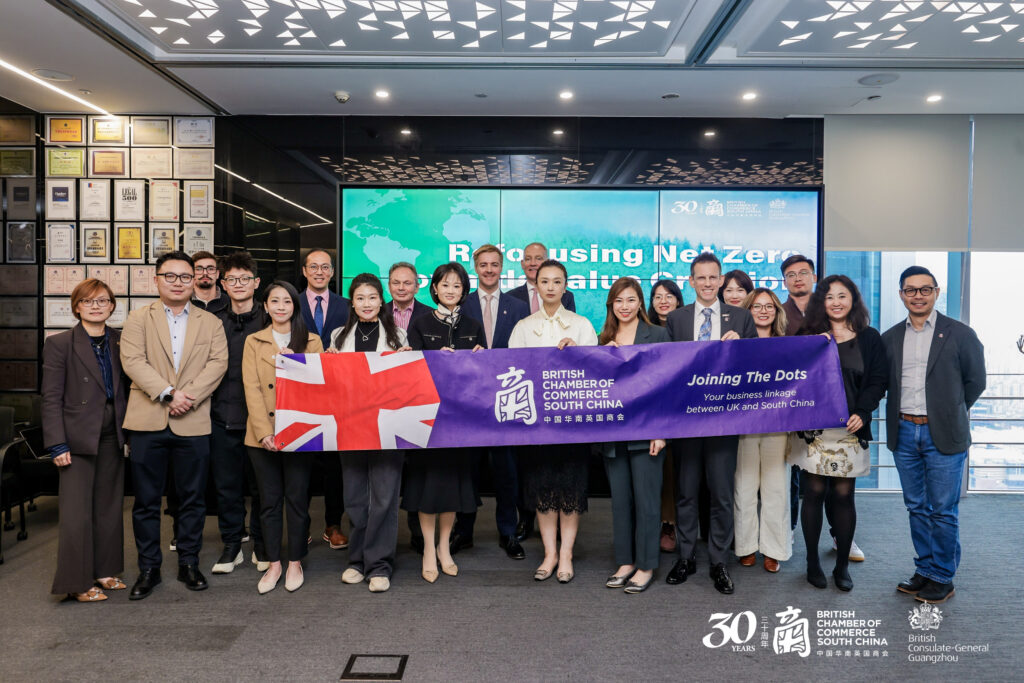
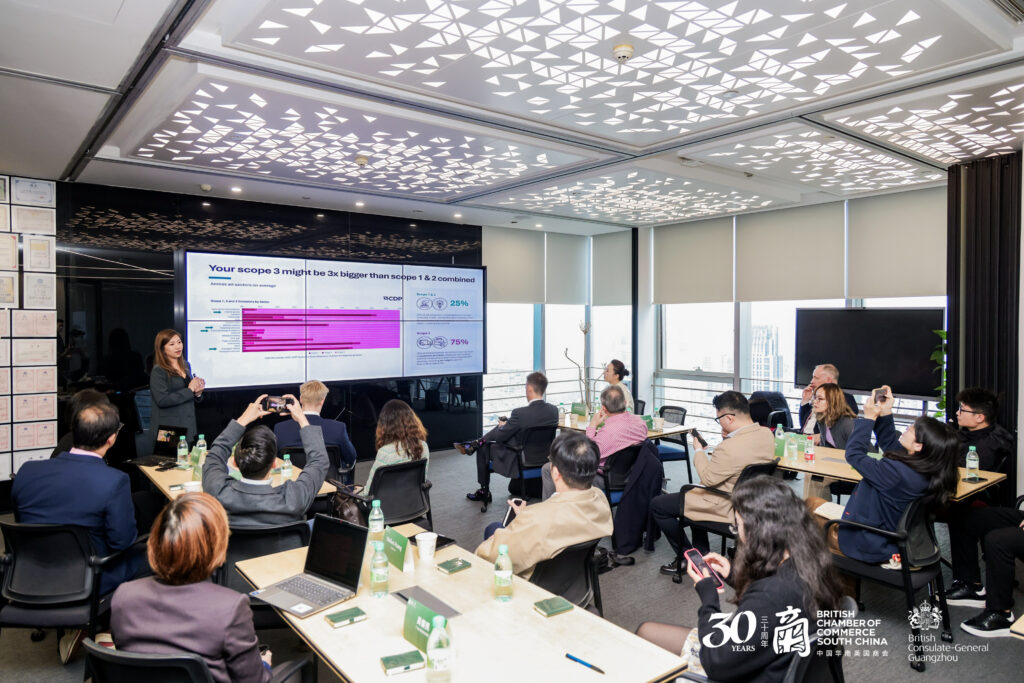
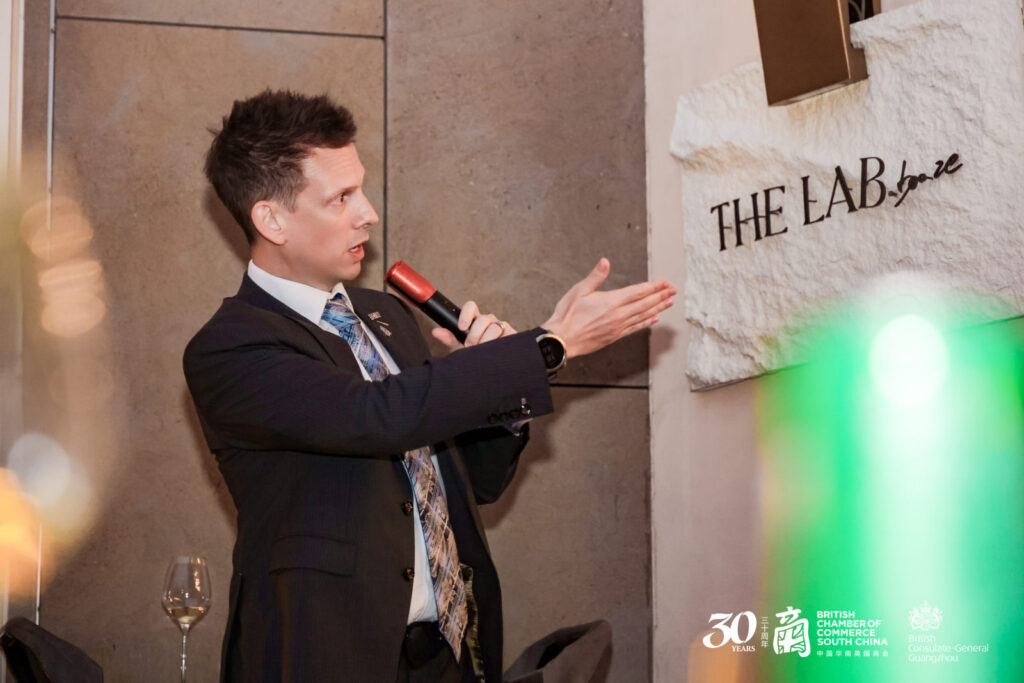
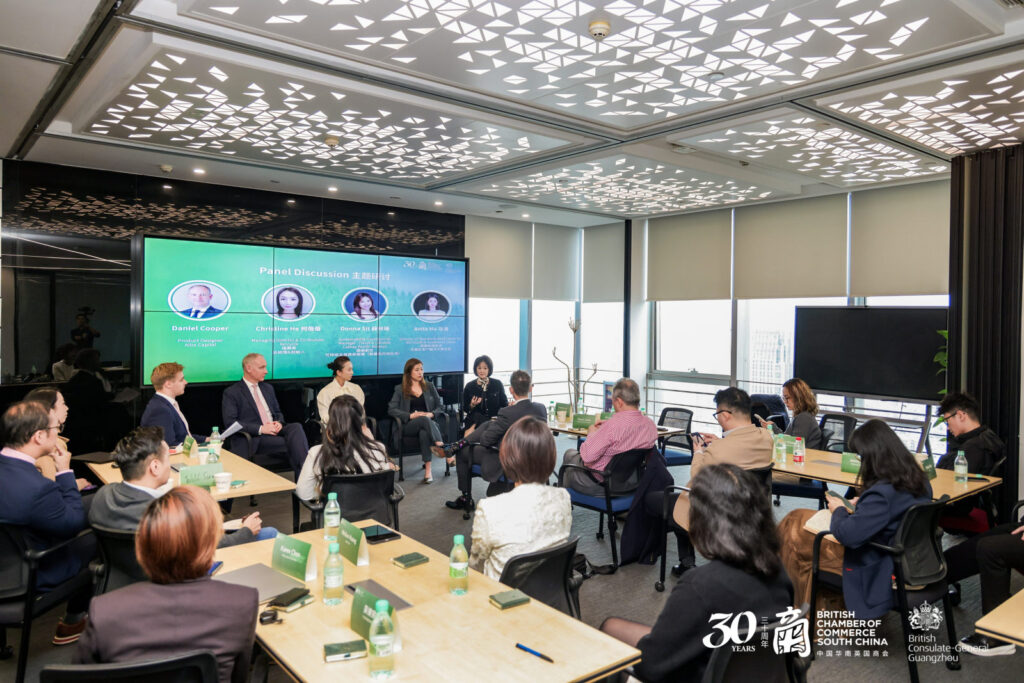
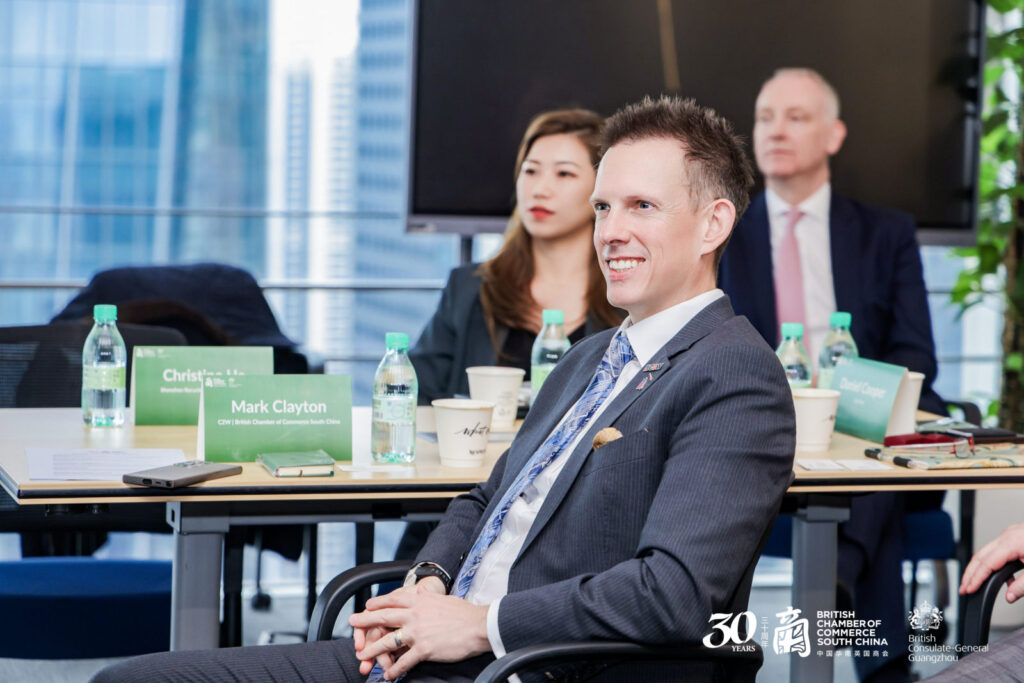
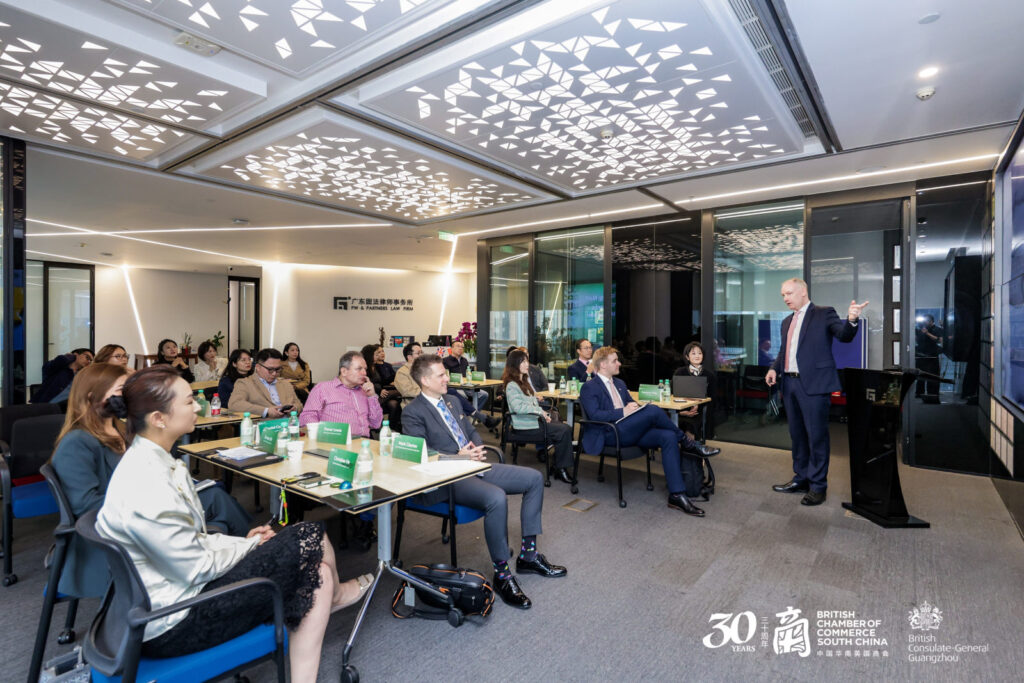
On 10 March 2026, the British Chamber of Commerce South China hosted its Net Zero Conference at PW & Partners Law Firm in Guangzhou — bringing together 25 delegates for a half-day of expert presentations, panel discussion, and frank conversation about what net zero actually means in practice for businesses operating in and through China’s supply chains.
The conference’s central thesis — Refocusing Net Zero Towards Value Creation — set the tone from the outset. This wasn’t a day of green platitudes. It was a commercially grounded examination of how businesses can embed sustainability in ways that generate real value, not just compliance paperwork.
What We Heard
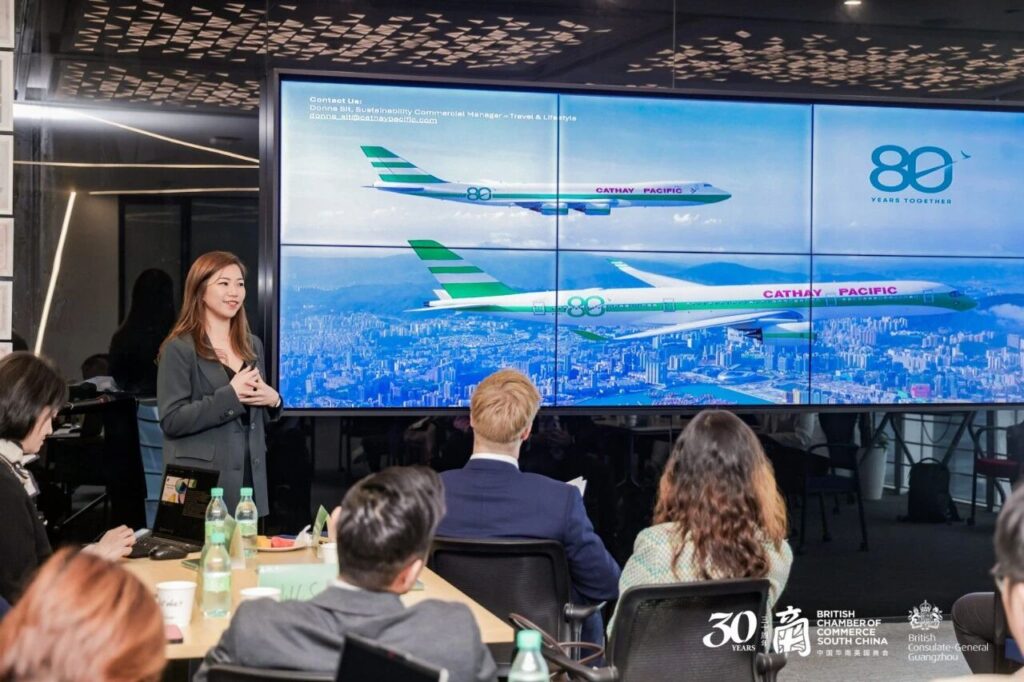
Four expert speakers shaped the day’s agenda, each bringing a different lens.
Daniel Cooper of Alba Capital opened with a macro reality check on the ESG cycle and the Scope 3 emissions challenge — arguing that for most supply chain businesses, Scope 3 represents approximately 85% of total carbon, yet remains the least managed. His most memorable insight: in case after case, supply chain carbon waste exists not because of structural constraints, but because of habit. “That’s what was offered” and “that’s what we’ve always done” are the real barriers — and asking why five times usually reveals an assumption, not an immovable reality. He backed this with striking case studies: a simple shift in distribution centre location reduced one US apparel brand’s transportation carbon by 99.5%; switching a single air freight leg to sea reduced another product’s total carbon by 14%.
Christine He of Re:cycle presented the Nespresso partnership as the day’s strongest proof of concept — a brand that has committed to net zero by 2035, fifteen years ahead of its parent company’s target, and is well advanced against it. Through circular aluminium recovery, 100% renewable electricity across production, and a regenerative coffee farming programme supporting over 168,000 farmers, Re:cycle has delivered a 24% carbon footprint reduction per cup since 2009. Christine’s most honest moment came during the panel: she does not believe the industry will actually reach net zero. Her reframe — sustainability is achievable by everyone; net zero is aspirational — was perhaps the most intellectually honest thing said all day, and arguably a more useful framework for setting business expectations than the industry’s standard language.
Donna Sit of Cathay Pacific shared how the airline used the devastation of COVID as a strategic inflection point, deliberately retiring “compliance” language internally. The framing now used with cabin crew and pilots is: “We all love travel — we need to protect it.” Her consumer research finding was sobering: even sustainability-minded customers in Hong Kong won’t pay more than a 20% premium — yet sustainable products are routinely priced higher. The commercial model must change before consumer behaviour follows, not the other way round.
Anita Ma of BSI rounded out the presentations with a practical overview of the ISO 14068 net zero pathway standard — positioning it as a market-access tool for Chinese SMEs facing increasing emissions disclosure demands from EU buyers under CBAM and CSRD. One striking data point: no Chinese company has yet certified through the BSI net zero pathway. That is both a gap and a first-mover opportunity — and one BCCSC is well placed to help facilitate.
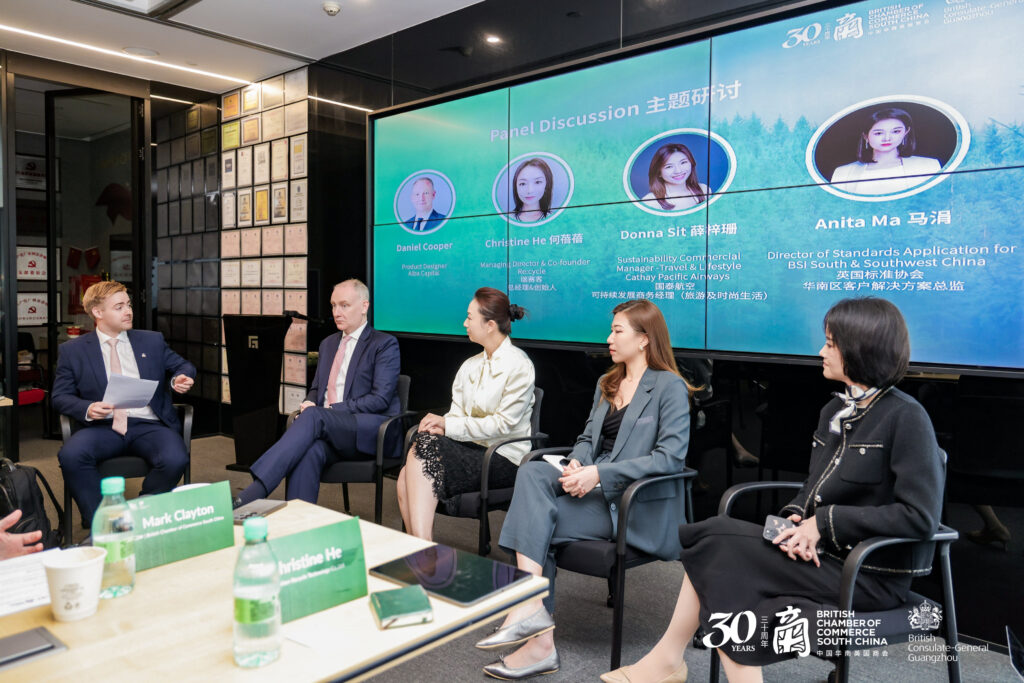
The Panel: Where the Real Debate Happened
The panel discussion surfaced five consistent themes: the collapse of consumer trust in sustainability claims following high-profile greenwashing scandals from H&M, Apple, and ASICS; the Gen Z paradox (values-driven in surveys, price-driven at checkout); the growing urgency for Chinese manufacturers going global to get ahead of EU procurement requirements; and the fundamental data constraint — companies can’t manage what they can’t measure, and most simply don’t have the supply chain data to act.
Trevor Lewis, Head of Trade & Investment at the British Consulate-General Guangzhou, contributed actively throughout — reinforcing the UK Government’s commercial interest in supporting UK-connected supply chains through this transition.
After the Conference — A Moment That Stood Out
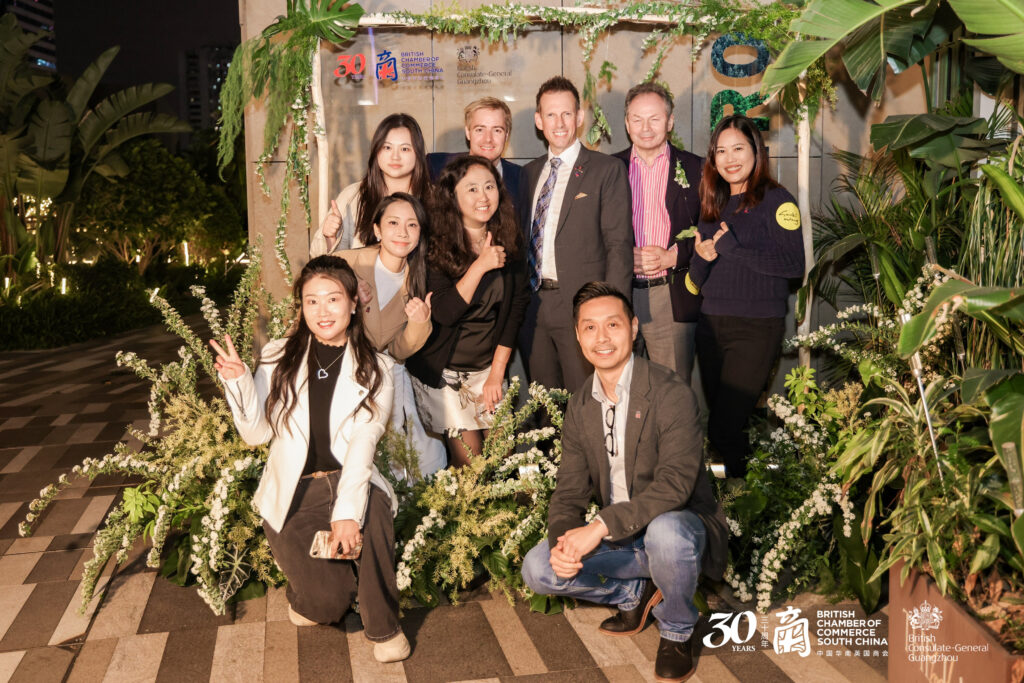
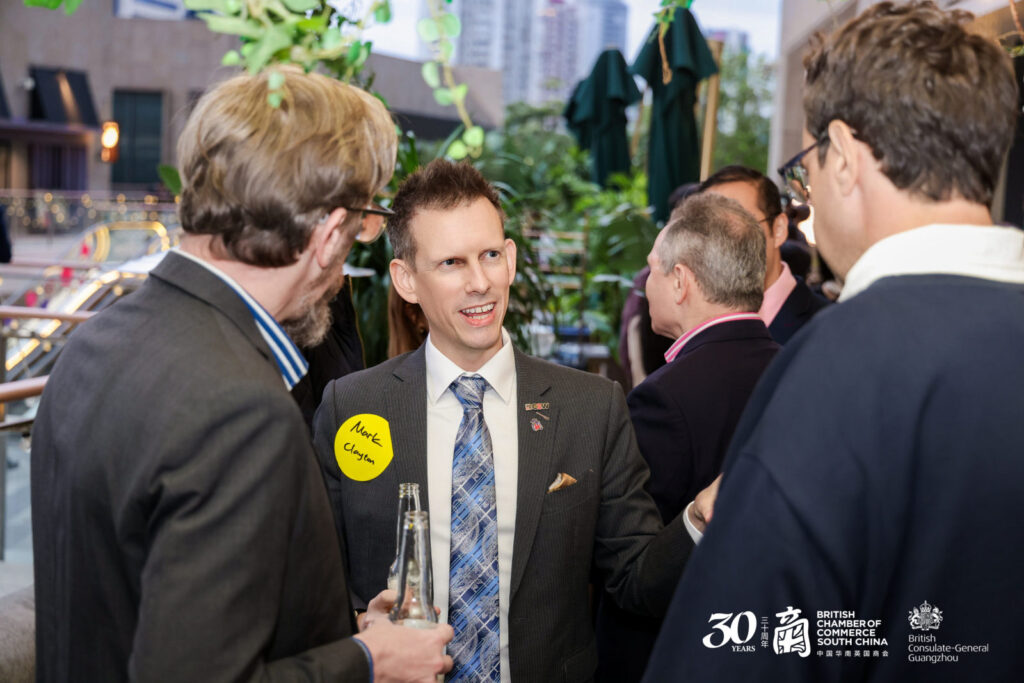
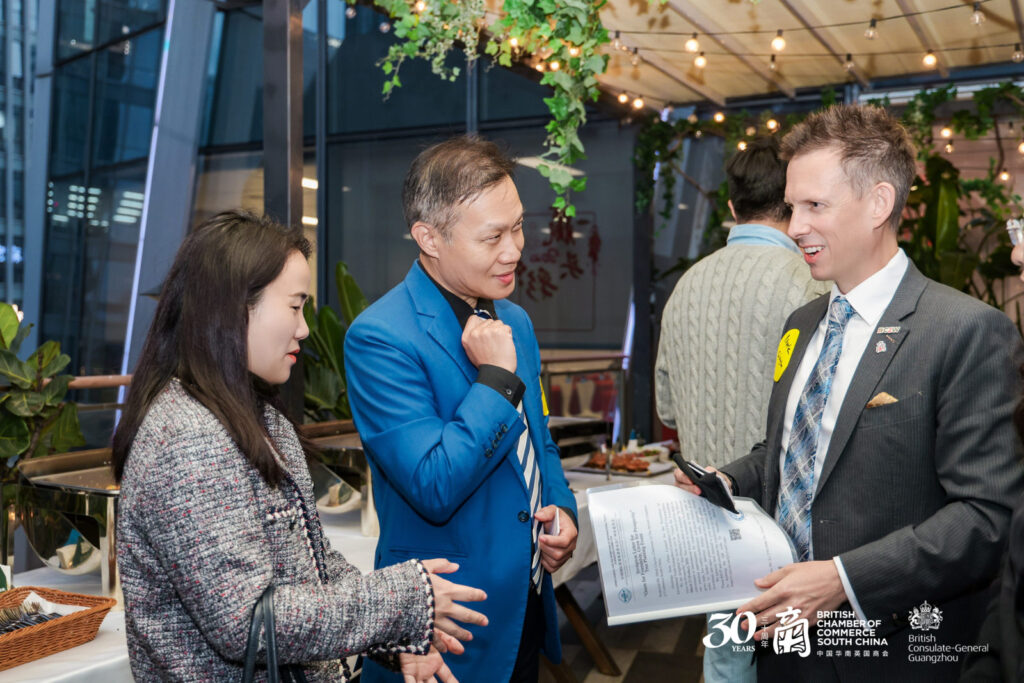
The formal programme concluded with a networking mixer — the Supply & Demand reception — and it produced one of those moments that remind you why this work matters.
Director 陈思民 (Chen Simin) from CCPIT, along with his entire leadership team, made a point of attending specifically to meet with me. The conversation that followed was warm, substantive, and unexpected: Director Chen extended a personal invitation for me to plant a tree in Guangzhou — a gesture of partnership and shared commitment to the environmental agenda that I found genuinely moving. It was a reminder that the most meaningful connections in this work are often the ones that happen after the formal agenda ends.
Looking Ahead
The conference identified several strong candidates for future BCCSC programming — including a dedicated Go Global event on net zero for Chinese exporters facing EU market access requirements, and a potential joint initiative with BSI to support South China manufacturers through the certification process. Both are under active consideration for later in 2026.
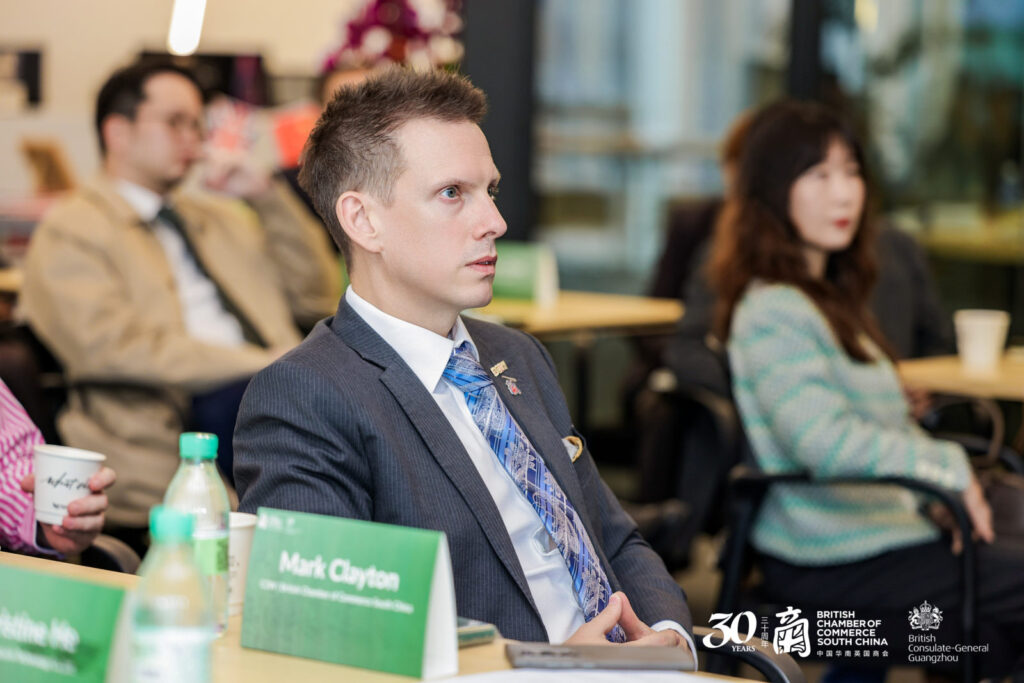
Mark Clayton FCMA CGMA CPA — Group CFO, C2W Group | Chairman, British Chamber of Commerce South China